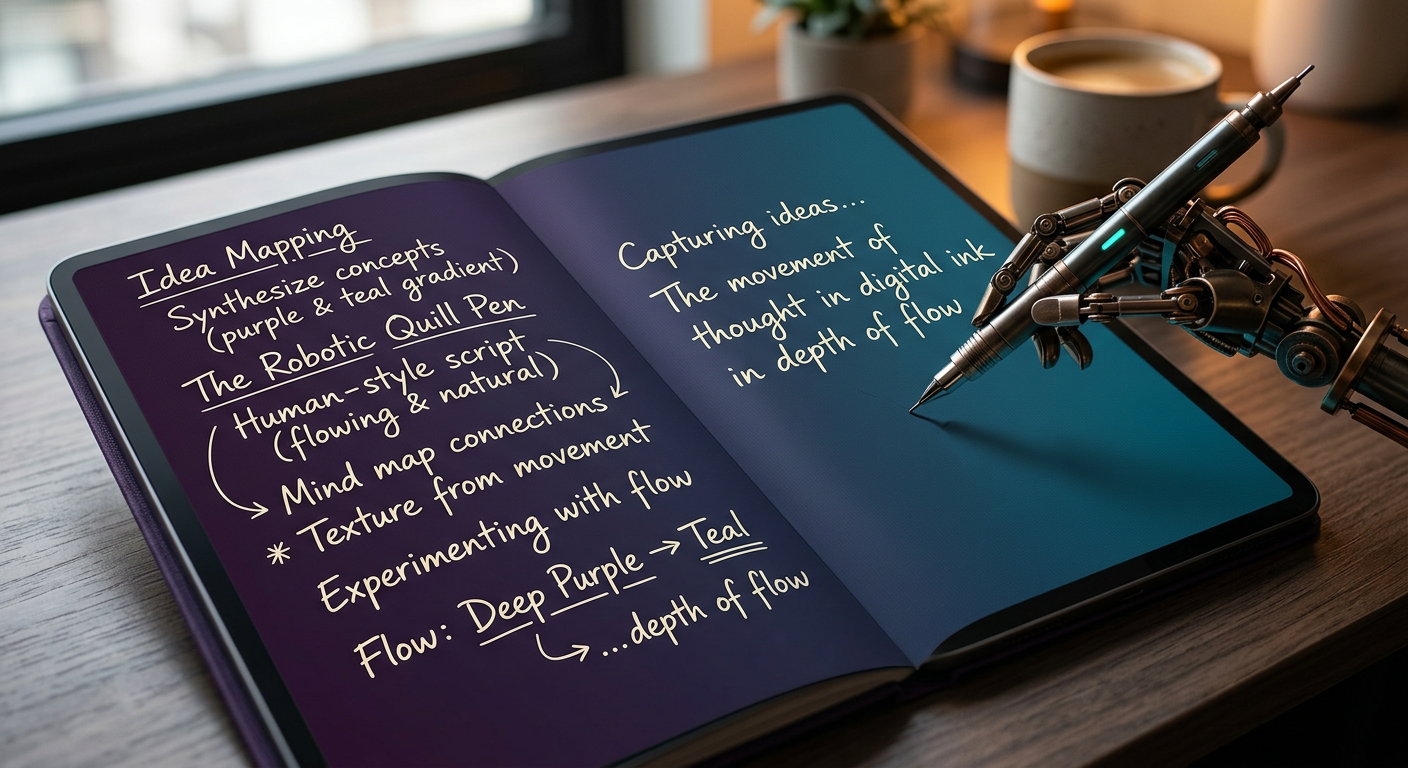
Why Most AI Writing Still Sounds Like a Robot
I’ve been running Hermes Agent for months now, and there’s one thing that keeps bugging me: the writing. Not the code — that’s solid. Not the automation — that’s getting better every week. But the blog posts, the tweets, the messages… they sound generic. Even with careful prompts, every AI assistant settles into the same bland, corporate tone. So I started thinking: what if I built a system that learns how I write, instead of me having to correct every post?
Last week I stumbled on a blog post by Holme Bengt about his Hermes setup, and one idea stuck with me: a style database. A structured way to capture how you actually write — your word choices, your sentence rhythm, your quirks — and feed that back into every piece of content the agent produces. Not as a one-time prompt tweak, but as a living, learning system.
The Idea: A Writing Improvement Tool
Here’s the thought experiment. Imagine a SQLite database that holds everything you’ve ever written — blog posts, tweets, Telegram messages, vault notes. A system extracts your style features: average sentence length, formality score, emoji patterns, typical opening phrases, Dutch vs English ratio. Then, every time Hermes writes something, it checks that database and adjusts its output to match you.
Not just a static prompt, but a feedback loop. You correct a sentence — the system learns. You say “this doesn’t sound like me” — it adapts. Every week, a cron job analyzes the week’s corrections and generates an updated style prompt. The agent gets better at being you without you having to explain over and over.
I documented this idea in my vault as the Writing Improvement Tool concept. It’s still at the whiteboard stage — no code written yet — but the structure is clear: scraper → feature extractor → style database → feedback processor → weekly update cron. Five components, maybe four hours of work.
Why This Matters for Everyone with an AI Assistant
If you use any AI tool for writing — whether it’s ChatGPT, Claude, or a custom Hermes setup like mine — you’ve noticed the problem. The output is correct, but it’s soulless. Every blog post starts with “In today’s digital landscape,” every email with “I hope this message finds you well.” That’s not how real people talk.
The writing improvement tool wouldn’t just make AI output better — it would make it faster. Because instead of editing every single post manually, you’d only correct the things that matter. The system handles the rhythm and the tone. You handle the substance.
What’s Next
I’m planning to build the first version this week. Starting with the scraper — pulling all my posts from ai-podium.nl, johnvaneck.nl, and my recent tweets into a SQLite database. Then the feature extractor, which analyzes writing patterns. And finally, the feedback loop that makes it all learn over time.
If you’ve tried something similar — a style guide, a custom prompt, a whole system — I’d love to hear about it. Drop a comment below. Because honestly, the biggest problem with AI writing isn’t the technology. It’s that nobody sounds like themselves anymore.
Wat vond je van dit bericht?
